

Your First Step: Understanding the Path to Local Addiction Treatment
Addiction rehab centers near me can provide life-saving treatment for substance use disorders, and finding the right one starts with understanding your options. Here’s what you need to know:
Quick Guide to Finding Local Addiction Treatment:
- Call 24/7 helplines – Drug Rehab Headquarters: 866-720-3784 or SAMHSA: 1-800-662-4357
- Verify accreditation – Look for Joint Commission, CARF, or state licensing
- Check insurance coverage – Most major plans cover addiction treatment in 2025
- Choose your level of care – Options include detox, inpatient (residential), or outpatient programs
- Consider specialized needs – Programs exist for teens, veterans, LGBTQ+ individuals, and co-occurring mental health conditions
Addiction is a treatable disease. More than 21 million Americans struggle with substance use disorders in 2025, yet only about 10% seek help. If you’re reading this, you’ve already taken the most courageous step—acknowledging that change is needed.
Finding the right treatment center can feel overwhelming. You’re facing questions about cost, insurance, treatment types, and which facilities are actually qualified to help. Maybe you’re worried about taking time away from work or family. Perhaps you’ve tried to quit before and relapsed.
This guide cuts through the confusion. We’ve researched hundreds of facilities to help you understand what makes a quality rehab center, what treatment options exist near you, and how to access care—even if you’re concerned about affordability.
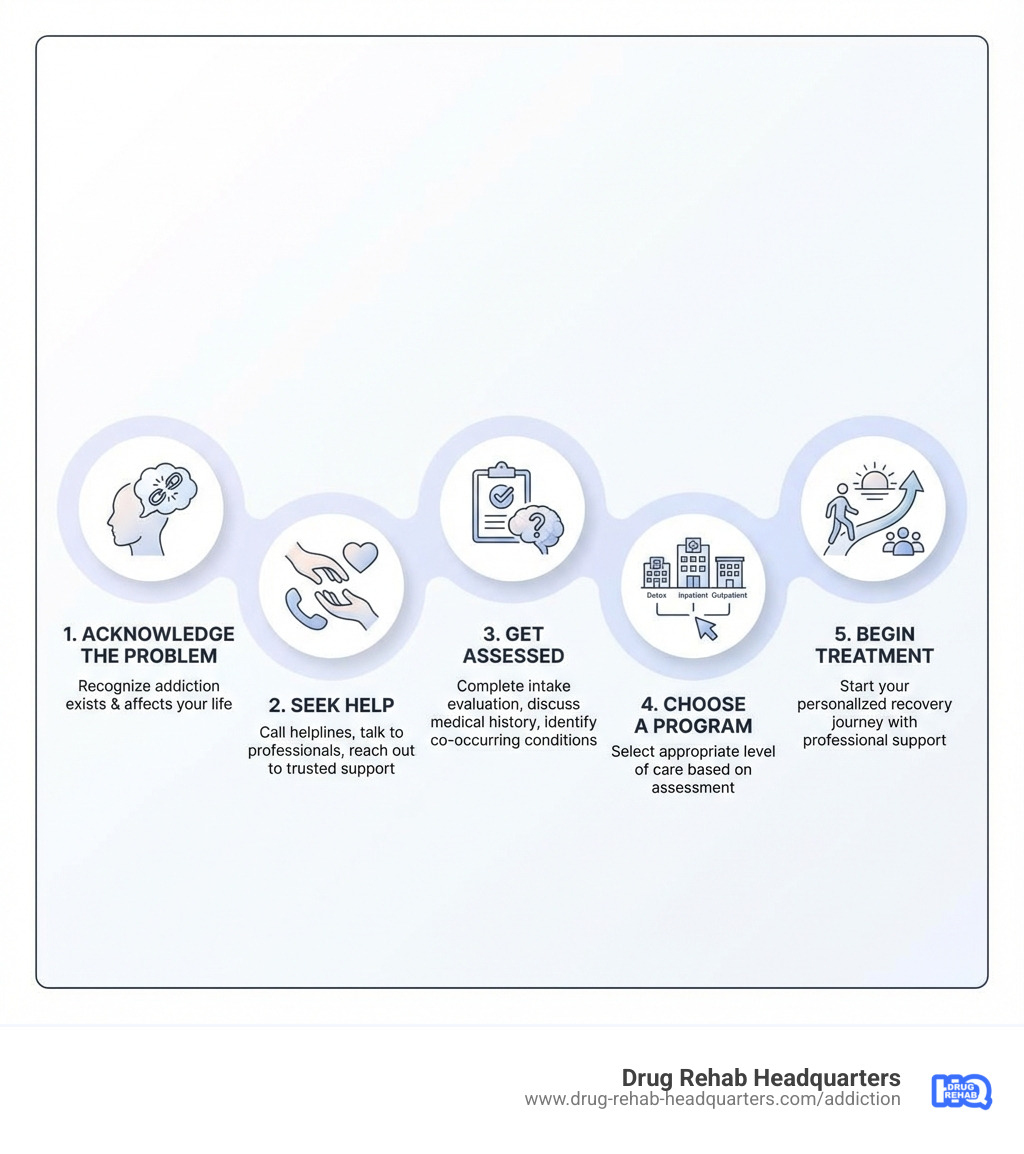
The path to recovery follows five key steps: acknowledging the problem, seeking help, getting professionally assessed, choosing the right program, and beginning treatment. Each step matters, and none require you to steer them alone.
At Drug Rehab Headquarters, we’ve spent years connecting individuals and families with addiction treatment resources and verified rehab centers across the country. Our team understands the challenges you face when searching for addiction rehab centers near me, and we’re here to provide confidential guidance 24/7 at 866-720-3784.
Explore more about addiction rehab centers near me:
A 10-Point Checklist for Reviewing Top Addiction Rehab Centers Near Me
When you’re looking for addiction rehab centers near me, it’s crucial to have a clear understanding of what constitutes quality care. Our 10-point checklist will empower you to make an informed decision for yourself or a loved one.
1. Accreditations and Licensing
Accreditation and licensing are your first indicators of a reputable treatment center. These signify that a facility meets rigorous standards for patient care, safety, and ethical practices. Think of them as the gold stars of the addiction treatment world.
- Accreditation: Look for national accreditations from organizations like The Joint Commission or the Commission on Accreditation of Rehabilitation Facilities (CARF). For example, a top-tier center will proudly display its Joint Commission accreditation, signifying adherence to high quality and safety standards. These bodies conduct thorough reviews to ensure facilities provide effective and safe treatment.
- Licensing: State licensing is mandatory for all addiction treatment facilities. This ensures they comply with state-specific regulations for operation. The SAMHSA National Directory of Drug and Alcohol Use Treatment Facilities lists facilities that are licensed, certified, or approved by State Substance Use Agencies. Always verify a center’s current licensing status.
2. Evidence-Based Treatment
Effective addiction treatment isn’t based on guesswork; it’s grounded in scientific research. Evidence-based treatments (EBTs) are therapeutic approaches proven to be effective through clinical trials. When searching for addiction rehab centers near me, prioritize facilities that openly discuss their use of EBTs.
Common evidence-based approaches include:
- Cognitive-Behavioral Therapy (CBT): Helps individuals identify and change problematic thought patterns and behaviors contributing to substance use.
- Dialectical Behavior Therapy (DBT): Focuses on emotional regulation, mindfulness, distress tolerance, and interpersonal effectiveness.
- Motivational Interviewing: A counseling approach that helps people resolve ambivalent feelings and insecurities to find the internal motivation needed to change their behavior.
- Medication-Assisted Treatment (MAT): Combines behavioral therapies with medications to treat substance use disorders, particularly opioid and alcohol addiction. Many leading facilities incorporate MAT into their programs, offering a comprehensive approach.
- Twelve-step Facilitation (TSF): Helps individuals engage with 12-step programs (like Alcoholics Anonymous or Narcotics Anonymous) and learn their principles.
3. A Full Continuum of Care
Addiction recovery is rarely a linear process, and effective treatment often involves transitioning through different levels of care. A facility offering a full continuum ensures seamless transitions as your needs evolve.
This includes:
- Medical Detox: The first step for many, providing medical supervision during withdrawal (more on this below).
- Inpatient/Residential Treatment: 24/7 structured care in a supportive environment.
- Partial Hospitalization Programs (PHP): Intensive day treatment where you return home at night.
- Intensive Outpatient Programs (IOP): Fewer hours than PHP, allowing more flexibility.
- Outpatient Treatment: Regular therapy sessions while maintaining daily life.
- Aftercare and Sober Living: Ongoing support to prevent relapse.
4. Dual Diagnosis Capability
It’s common for individuals struggling with addiction to also experience co-occurring mental health disorders like depression, anxiety, or PTSD. This is known as a dual diagnosis. In 2025, about half of people with a substance use disorder also experience a serious mental illness. Treating only one condition often leads to relapse in the other.
A quality rehab center will provide integrated treatment, addressing both the addiction and any underlying mental health issues simultaneously. This often involves psychiatric evaluations, medication management for mental health, and therapy custom to both conditions. A quality rehab center, for example, will offer psychiatric consultations to address co-occurring mental health conditions, ensuring a holistic approach.
5. Specialized Programs
Addiction affects everyone differently, and some individuals benefit from programs custom to their unique experiences and demographics. When searching for addiction rehab centers near me, ask about specialized tracks.
These might include:
- Veterans programs: Addressing trauma and specific challenges faced by military personnel.
- LGBTQ+ affirming care: Creating a safe and inclusive environment.
- Teen rehab: Programs designed specifically for adolescents, considering their developmental needs. Many centers offer adolescent programs.
- Gender-specific treatment: Providing separate programs for men and women to foster open communication and address gender-specific issues.
- Programs for professionals: Catering to the unique needs of individuals whose careers may be impacted by addiction.
6. Qualified, Compassionate Staff
The people delivering your care are as important as the program itself. A strong treatment team includes credentialed professionals such as medical doctors, psychiatrists, licensed therapists, addiction counselors, and support staff.
Look for centers that emphasize:
- Expertise: Staff with relevant education, certifications, and experience in addiction medicine and mental health.
- Compassion: A caring and empathetic approach is crucial for building trust and facilitating healing.
- Appropriate Staff-to-Patient Ratios: Ensuring you receive adequate individual attention and support.
7. Family Support and Therapy
Addiction is a family disease, impacting everyone involved. Effective treatment recognizes this and often includes family in the recovery process. Family involvement is considered essential to recovery at leading facilities.
Look for programs that offer:
- Family therapy sessions: To heal relationships and improve communication.
- Educational workshops: To help family members understand addiction and how to support their loved one.
- Support groups: For family members to connect with others facing similar challenges.
8. Robust Aftercare Planning
Completing a rehab program is a significant achievement, but it’s just the beginning of a lifelong journey. A comprehensive aftercare plan is vital for sustained sobriety and relapse prevention.
Key components of robust aftercare include:
- Relapse prevention planning: Developing strategies to identify triggers and cope with cravings.
- Sober living arrangements: Transitional housing that provides a supportive, substance-free environment.
- Alumni programs: Connecting graduates with a supportive community and ongoing resources, as is common in high-quality programs.
- Continued therapy and support groups: Such as 12-step programs (e.g., AA, NA) or SMART Recovery.
9. A Safe and Healing Environment
The physical environment of a rehab center plays a significant role in a patient’s comfort and ability to focus on recovery. When researching addiction rehab centers near me, consider the setting.
Desired features might include:
- Comfortable accommodations: Some centers offer private rooms with private bathrooms, enhancing privacy and safety.
- Serene surroundings: A peaceful environment, like a facility set on a large, private estate, can promote healing and reflection.
- Recreational therapy: Activities like yoga, meditation, art therapy, and physical exercise can help develop a body-mind connection, as emphasized at many leading centers. Some even have therapy animals, like a facility’s therapy dog.
10. Transparent Costs and Insurance
Financial concerns are often a major barrier to seeking treatment. A reputable center will be transparent about costs and help you steer payment options.
- Cost breakdowns: Some drug rehab centers, for example, may not provide upfront cost information to non-enrolled individuals. However, quality centers should be able to provide clear breakdowns of their program costs.
- Insurance verification: Most major commercial health plans cover addiction treatment. Centers should have experts who can help verify your coverage.
- Payment options: Beyond insurance, inquire about private pay options, payment plans, or sliding scale fees based on income.
Comparing Treatment Programs: Residential vs. Outpatient
Choosing the right level of care is a critical decision in your recovery journey. When searching for addiction rehab centers near me, you’ll primarily encounter residential (inpatient) and outpatient programs, often preceded by medical detoxification.

The Critical Role of Medical Detoxification
For many, the first and most crucial step in addiction treatment is medical detoxification, or detox. This process involves safely removing addictive substances from the body under medical supervision. Withdrawal symptoms can range from uncomfortable to life-threatening, making professional detox essential.
- Medical supervision: During detox, medical professionals monitor your vital signs and administer medications to alleviate withdrawal symptoms and prevent complications. Leading inpatient units, for instance, provide a safe and humane environment for detoxification.
- Safety: A medically supervised detox ensures your safety and comfort during a challenging period. Most patients complete detoxification within 5-7 days, though the duration can vary based on the substance and individual health.
- First step to recovery: Detox stabilizes you physically, preparing you for the deeper therapeutic work of rehabilitation.
Benefits of Residential (Inpatient) Rehab
Residential treatment provides an immersive, 24/7 structured environment away from daily triggers and stressors. It’s often recommended for individuals with severe addiction, co-occurring mental health disorders, or those who haven’t succeeded in outpatient settings.
- 24/7 structured care: Patients live at the facility, receiving constant support and supervision. This structured setting helps establish new routines and healthy habits.
- Immersive environment: Being removed from your usual environment allows you to fully focus on recovery without external distractions or negative influences.
- Removed from triggers: A residential setting helps break the cycle of addiction by eliminating access to substances and minimizing exposure to people, places, or situations that trigger use.
- Average length of stay: The duration is individualized, but many residential programs last an average of two to four weeks, and a typical stay is often 28 days long.
Flexibility of Outpatient Programs (PHP & IOP)
Outpatient programs offer more flexibility, allowing individuals to live at home or in a sober living environment while attending treatment sessions during the day or evening. These programs are suitable for those with a strong support system, stable home environment, or less severe addiction.
- Live at home: You can maintain your responsibilities at home, work, or school while receiving treatment.
- Maintain work or school: This flexibility is particularly beneficial for professionals or students who cannot commit to inpatient care. Some centers offer specialized programs to integrate recovery services without jeopardizing employment.
- Intensive Outpatient (IOP): IOPs provide several hours of therapy per week, often three to five days a week, focusing on individual and group counseling.
- Partial Hospitalization (PHP): PHPs are more intensive than IOPs, often running five days a week for several hours a day, providing a level of care similar to inpatient treatment but without overnight stays.
Here’s a quick comparison:
| Feature | Residential (Inpatient) Treatment | Outpatient Treatment (PHP & IOP) |
|---|---|---|
| Intensity | High; 24/7 supervision and support | Moderate to High; structured sessions while living at home |
| Structure | Highly structured daily schedule; removed from external environment | Structured sessions; requires self-discipline to maintain sobriety in daily life |
| Cost | Generally higher due to room, board, and round-the-clock care | Generally lower than residential |
| Ideal Candidate | Severe addiction, co-occurring disorders, unstable home environment, previous outpatient failures | Strong support system, stable home, less severe addiction, need to maintain work/school/family responsibilities |
| Duration | Typically 2-4 weeks or 28 days, but can be longer based on individual needs | Varies; can be weeks to months depending on program and individual progress |
Navigating the Financial Side of Rehab in 2025
Concerns about the cost of addiction treatment are valid. Many people wonder, “How can I afford addiction rehab centers near me?” However, viewing treatment as an investment in long-term health and well-being can shift perspective. The good news is that numerous options exist to make treatment accessible and affordable.
The Average Cost of Treatment and Payment Options
The cost of addiction treatment can vary widely based on the type of program, its duration, location, and amenities. In 2025, the national average cost for substance abuse treatment can be around $56,500. For instance, in 2025, the average cost for a person in Michigan who enters substance abuse treatment is $56,508. This figure can seem daunting, but this is an average, and many payment options are available.
Common payment options include:
- Private Pay: Directly paying for services out-of-pocket.
- Sliding Scale Fees: Some facilities offer reduced rates based on your income and ability to pay.
- Payment Plans: Many centers work with patients to set up manageable payment schedules.
- Financial Assistance/Grants: Government programs, non-profits, and some treatment centers offer grants or scholarships to help cover costs.
- Loans: Healthcare loans can be an option for some individuals.
Using Insurance to Cover Addiction Treatment
Thanks to federal mandates like the Affordable Care Act (ACA) and the Mental Health Parity and Addiction Equity Act (MHPAEA), most health insurance plans are required to cover substance use disorder treatment at parity with medical and surgical care. This means your insurance should cover addiction rehab.
- Private Insurance: Most major commercial health plans are typically accepted at accredited facilities. For example, top-tier facilities often accept most major commercial health plans and may hold special distinctions from insurers like Blue Cross Blue Shield or Cigna, designating them as Centers of Excellence.
- In-network vs. Out-of-network: Understanding whether a facility is in-network or out-of-network with your insurance plan is crucial, as it affects your out-of-pocket costs. In-network providers generally result in lower costs.
- Verifying Benefits: Always verify your specific insurance benefits directly with your provider or through the treatment center’s admissions team. They can clarify your deductible, co-pays, and any limitations.
How to find addiction rehab centers near me that accept your plan
Finding addiction rehab centers near me that accept your specific insurance plan is a key step.
- Call Your Insurance Provider: Look for the customer service number on the back of your health insurance card. They can provide a list of approved providers in your area.
- Use Online Directories: Resources like SAMHSA’s FindTreatment.gov allow you to search for facilities by location and filter by payment options, including insurance.
- Contact Drug Rehab Headquarters: Our team specializes in helping you steer the complexities of insurance coverage. We can perform a free, confidential insurance check and help you find addiction rehab centers near me that accept your plan.
[Call Drug Rehab Headquarters at 866-720-3784 for a free insurance check]
What to Expect: From Your First Call to Long-Term Sobriety
Taking the first step by reaching out for help is brave. Understanding what comes next can make the process less intimidating. From your initial inquiry to life after rehab, we’ll walk you through the journey.

The Confidential Intake and Assessment Process
Your journey typically begins with a confidential phone call, often to a helpline or directly to a treatment center. This initial contact is usually a pre-admission screening to gather basic information and answer your immediate questions.
The next step is a comprehensive assessment, which is a thorough evaluation of your physical and mental health, substance use history, and any co-occurring disorders. This is not a judgment; it’s about understanding your unique needs to create a personalized treatment plan.
- Comprehensive Evaluation: A multidisciplinary team, including physicians, psychologists, and counselors, will conduct this assessment. They’ll ask about your substance use patterns, medical history, mental health, and social support.
- Creating a Personalized Plan: Based on this evaluation, a custom treatment plan will be developed. This plan will outline the recommended level of care, therapies, and any specialized programs that would benefit you. Some centers even offer a no-fee initial assessment to help you get started.
Evidence-Based Therapies for Addiction and Mental Health
Once assessed, you’ll begin engaging in therapies designed to address the root causes of addiction and equip you with coping skills for sobriety.
- Individual Therapy: One-on-one sessions with a therapist to explore personal issues, trauma, and develop coping mechanisms.
- Group Therapy: Sessions with peers facing similar challenges, fostering a sense of community, shared experience, and mutual support.
- Family Counseling: As discussed, family involvement is crucial. These sessions help heal relationships and improve communication within the family unit.
- Holistic Therapies: Many modern rehabs integrate holistic approaches to treat the “whole person.” Many modern rehabs, for example, incorporate mindfulness practices like yoga, guided meditation, physical exercise, and art therapy to foster a body-mind connection. Music therapy and animal-assisted therapy are also becoming more common.
Life After Rehab: The Importance of Aftercare and Relapse Prevention
Completing a rehab program is a monumental achievement, but recovery is an ongoing process. The period immediately following formal treatment is crucial for solidifying new habits and preventing relapse. This is where robust aftercare planning comes into play.
- Relapse Prevention: You’ll learn to identify triggers, develop coping strategies, and create a personal relapse prevention plan.
- Sober Living Environments: For some, transitioning to a sober living home provides a structured, substance-free environment and peer support as they reintegrate into daily life.
- Alumni Programs: Many centers offer alumni programs, connecting you with a supportive network of individuals who have successfully completed treatment.
- Support Groups: Continued participation in 12-step programs (like AA or NA) or other recovery support groups provides ongoing peer support and accountability. Quality treatment programs emphasize the importance of 12-step programs and other support resources.
- Continued Counseling: Regular individual or group therapy sessions can provide ongoing guidance and support as you steer the challenges of long-term recovery.
Get Help Now: Crisis Support and Finding a Verified Center
When you’re ready to seek help for addiction, immediate access to reliable information and support is paramount. We are here to guide you to the right resources.
How to find accredited addiction rehab centers near me
Finding highly-rated and accredited addiction rehab centers near me ensures you receive quality care.
- Checking Accreditations: As mentioned earlier, look for accreditations from The Joint Commission or CARF. These are voluntary processes that demonstrate a commitment to high standards. The SAMHSA National Directory also lists facilities that are licensed, certified, or approved by State Substance Use Agencies.
- Reading Reviews: While not the sole factor, online directories and patient testimonials can offer insights into the patient experience, staff compassion, and facility environment.
- Asking Questions: Don’t hesitate to ask potential centers about their treatment philosophies, staff qualifications, success rates, and aftercare programs. A reputable center will be transparent and willing to answer your questions.
- Use Our Expertise: Our team at Drug Rehab Headquarters can help you identify accredited and highly-rated addiction rehab centers near me that align with your specific needs.
[Call Drug Rehab Headquarters at 866-720-3784 for guidance]
Immediate Support: National Addiction and Crisis Helplines
If you or a loved one are in immediate crisis related to addiction or mental health, help is available 24/7.
- 988 Suicide & Crisis Lifeline: For free and confidential support for people in distress, 24/7. Call or text 988.
- National Helpline (SAMHSA): Offers treatment referral and information, 24/7. Call 1-800-662-HELP (4357).
- Disaster Distress Helpline: Provides immediate crisis counseling related to disasters, 24/7. Call 1-800-985-5990.
- Drug Rehab Headquarters Helpline: For immediate, confidential assistance in finding addiction rehab centers near me and understanding your options, our helpline is available 24/7.
[Call Drug Rehab Headquarters at 866-720-3784 for immediate help]
Your Confidential Call to Recovery
The journey to recovery starts with a single, courageous step. We understand that reaching out can be difficult, but you don’t have to face addiction alone. Our compassionate specialists are available to listen, provide information, and guide you through your options without judgment or obligation.
We’re here to help you find addiction rehab centers near me that fit your unique needs, whether it’s understanding different treatment types, navigating insurance, or simply exploring what recovery could look like for you. Your call is confidential, and your path to a healthier future begins today.
Call our 24/7 helpline at 866-720-3784.
Conclusion: Your Journey to a Healthier Future Starts Today
Finding the right addiction rehab centers near me is a pivotal step towards reclaiming your life from substance use disorder. We’ve explored the essential elements of quality treatment, from accreditations and evidence-based therapies to comprehensive aftercare and financial considerations. Addiction is a treatable disease, and recovery is not only possible but within your reach.
At Drug Rehab Headquarters, we are committed to connecting you with the resources and support you need. Our dedicated team is ready to answer your questions, verify your insurance, and help you find a path to lasting sobriety. Don’t let uncertainty or fear hold you back any longer.
Take the next step towards a healthier, happier future. Call 866-720-3784 for help, and let us guide you.