

Why Finding the Right Alcohol Recovery Center Matters
Alcohol recovery centers near me are specialized facilities that provide medical detoxification, therapy, counseling, and ongoing support for individuals struggling with alcohol addiction. If you’re searching for help right now, here’s what you need to know:
Quick Guide to Finding Local Alcohol Recovery Centers:
- Inpatient/Residential Programs – 24/7 medical supervision, structured environment, typically 30-90 days
- Outpatient Programs (OP/IOP) – Flexible scheduling for work/family, regular therapy sessions, less intensive than inpatient
- Medical Detox – Supervised withdrawal management with 24/7 medical monitoring
- Virtual/Telehealth – Remote access to counseling and therapy from home
- Aftercare & Support Groups – Long-term recovery support including AA meetings and alumni programs
Call 866-720-3784 now for a free, confidential assessment to find the right treatment option in your area.
The journey to recovery starts with a single decision. According to 2025 projections, more than 35% of people will experience a mental health or addiction problem at some point in their lives, and finding quality treatment close to home can make all the difference. Local alcohol recovery centers offer the advantage of staying connected to your support system while receiving professional care in a familiar geographic area.
Whether you’re seeking help for yourself or a loved one, understanding your options is crucial. Treatment centers vary widely in their approaches, costs, and specializations. In 2025, while specific costs for U.S. residential treatment can vary significantly by state and facility, we know that comprehensive care is an investment in a healthier future. Many facilities work with insurance providers and offer payment plans to make treatment accessible.
At Drug Rehab Headquarters, we specialize in connecting individuals with trusted alcohol recovery centers near me and across North America, providing free assessments and guidance 24/7 at 866-720-3784. Our experienced team helps match you with evidence-based treatment programs custom to your unique situation, ensuring you receive the support you need to achieve lasting recovery.
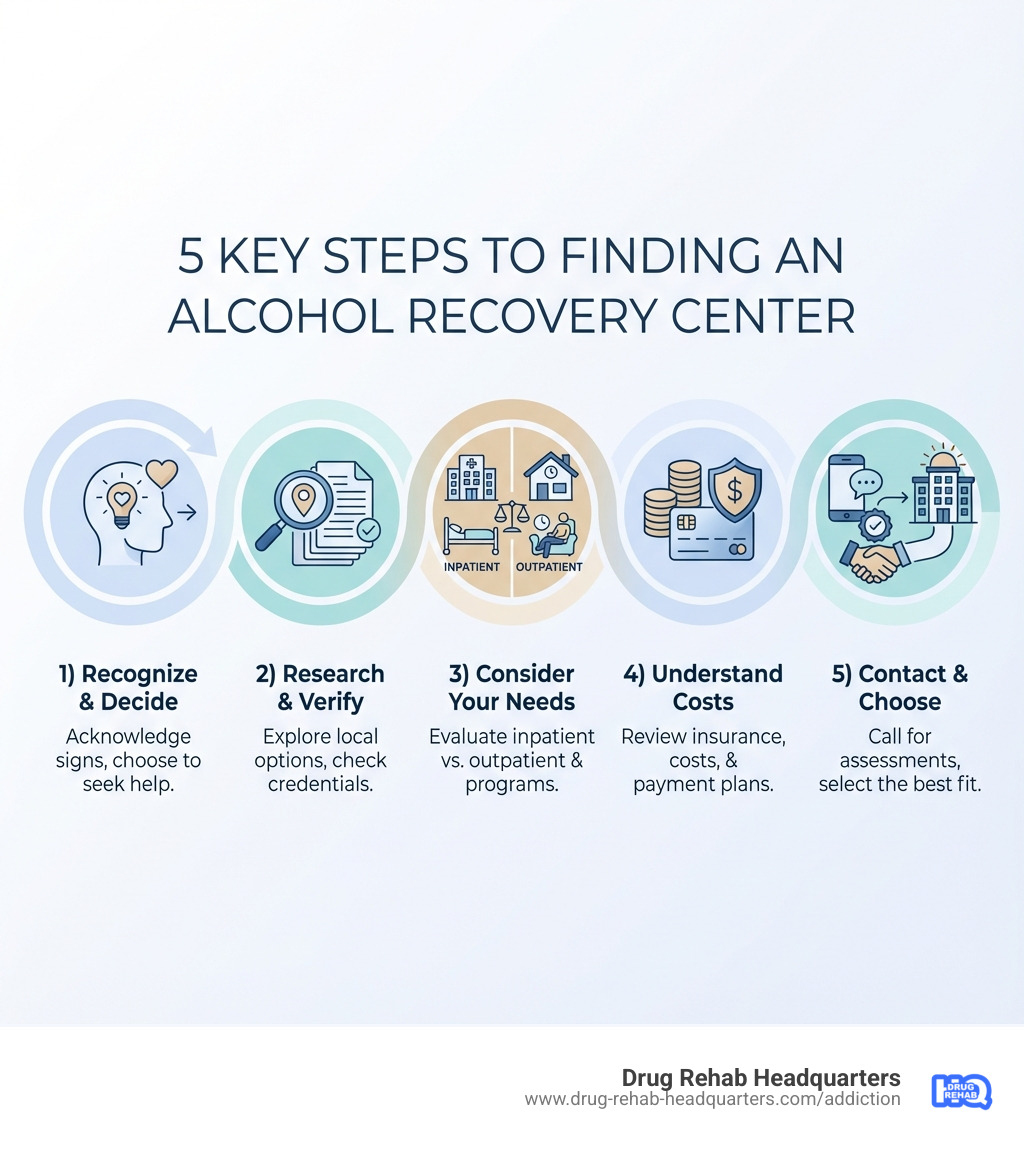
Recognizing the Signs: When to Seek Professional Help
It’s not always easy to admit that a problem exists, either for ourselves or for a loved one. Alcohol addiction often develops subtly, blurring the lines between casual drinking and problematic use. However, recognizing the signs early can be a crucial step towards seeking professional help and preventing more severe consequences.

When should you consider professional help for alcohol addiction? Here are some key indicators:
-
Physical Signs of Alcohol Abuse: These can be varied and often depend on the severity and duration of alcohol use. They might include frequent hangovers, tremors, slurred speech, memory blackouts, unexplained injuries, neglected personal hygiene, or changes in appearance such as flushed skin or broken capillaries. For instance, prolonged alcohol use can lead to serious health issues impacting the liver, heart, and brain. If you or a loved one experiences any of these, it’s a sign that professional intervention may be needed. For more detailed information on physical indicators, you can explore our resources on Alcohol Addiction Signs.
-
Behavioral and Psychological Changes: Addiction is characterized by compulsive seeking and use despite negative consequences. You might notice an increased tolerance to alcohol, meaning more is needed to achieve the same effect. There might be a preoccupation with alcohol, spending a significant amount of time obtaining, using, or recovering from its effects. Individuals may attempt to cut down or control their drinking but fail repeatedly. They might become secretive, irritable, anxious, or depressed, especially when unable to drink. Mood swings, aggression, and a loss of interest in previously enjoyed activities are also common.
-
Impact on Work and Relationships: Alcohol addiction rarely affects only the addicted person; it impacts their entire sphere of influence. Performance at work may decline, leading to absenteeism, tardiness, or job loss. Relationships with family and friends can become strained due to arguments, broken promises, or neglect. Legal problems, such as DUIs, financial difficulties, or domestic issues, can also arise. If alcohol use is causing significant problems in major life areas, it’s a clear signal that professional help is necessary.
-
The Importance of Early Intervention: The earlier addiction is addressed, the better the chances for a successful recovery. Early intervention can prevent the progression of the disease and mitigate its long-term health and social consequences. If you or someone you know is struggling, reaching out is a sign of strength, not weakness. If thoughts of self-harm or suicide are present, please seek immediate help. You can contact the 988 Suicide & Crisis Lifeline for confidential support.
A Guide to Alcohol Recovery Programs in Your Area
When you’re looking for alcohol recovery centers near me, it’s helpful to understand the different types of programs available. Each offers a unique level of support and structure, designed to meet varying needs on the journey to sobriety. At Drug Rehab Headquarters, we connect individuals with a wide array of options across our network in states like Florida, California, Pennsylvania, South Dakota, and many more.
Medical Detoxification
Often the crucial first step in treating alcohol addiction, medical detoxification involves safely managing the physical withdrawal symptoms that occur when someone stops drinking. This process is medically supervised, typically 24/7, to ensure the individual’s safety and comfort.
- Supervised withdrawal: During detox, medical professionals monitor vital signs and administer medications to ease withdrawal symptoms, which can range from mild discomfort to severe, life-threatening complications like seizures or delirium tremens.
- Managing Alcohol Detox Symptoms: Symptoms can include anxiety, tremors, nausea, vomiting, headaches, sweating, and confusion. Medications help reduce these symptoms, making the process as tolerable as possible.
- 24/7 medical monitoring: This constant oversight is essential, especially for individuals with severe alcohol dependence, to prevent complications and provide immediate intervention if needed.
- First step for safety: Detox primarily focuses on physical stabilization, preparing the individual for the psychological and emotional work of recovery. It’s not a cure but a necessary foundation for treatment.
Inpatient / Residential Rehab
Inpatient or residential rehab programs offer an immersive, structured environment away from daily triggers and temptations. These programs provide 24-hour care and support, allowing individuals to focus entirely on their recovery.
- Immersive environment: Patients live at the facility, engaging in a comprehensive schedule of therapies, counseling, and activities. This removes them from their usual environment, which may be associated with drinking.
- 30, 60, or 90-day programs: While program lengths vary, common durations are 30, 60, or 90 days, or even longer for extended care. For example, facilities like the Orlando Recovery Center offer various lengths of stay, tailoring programs to individual needs.
- Structured daily schedules: Days are typically filled with individual and group therapy, educational sessions, recreational activities, and peer support meetings. This structure helps rebuild healthy routines.
- Peer support: Living alongside others who are also committed to recovery fosters a strong sense of community and mutual understanding, which is vital for healing.
Outpatient Programs (OP/IOP)
For those who require flexibility to maintain work, family, or educational commitments, outpatient programs (OP) and intensive outpatient programs (IOP) offer structured treatment while allowing individuals to live at home.
- Flexibility for work or family: Outpatient programs allow participants to attend therapy sessions and receive support for several hours a day, a few days a week, fitting around their existing responsibilities.
- Attending therapy sessions weekly: These sessions typically include individual counseling, group therapy, and educational workshops, focusing on relapse prevention, coping skills, and mental health.
- Intensive Outpatient (IOP) for more structure: IOPs offer a higher level of care than standard outpatient programs, with more frequent and longer sessions, but still less intensive than residential treatment. They are often a step-down option after inpatient care or a primary treatment for those with strong support systems.
- Explore Alcohol Addiction Rehab Options: We can help you steer these choices to find a program that suits your lifestyle and recovery needs.
Virtual and Telehealth Treatment
The rise of technology has brought about virtual and telehealth treatment options, making recovery more accessible than ever before. These programs deliver therapy and counseling remotely, often through secure online platforms.
- Remote access to care: Virtual programs allow individuals to participate in treatment from the comfort and privacy of their own homes, removing geographical barriers. Gateway Rehabilitation Center, for instance, offers a “Hope From Home” virtual recovery program.
- Online therapy and counseling: This can include individual therapy, group sessions, and educational workshops conducted via video calls.
- Convenient and private: For many, the convenience and privacy of virtual treatment make it a preferred option, especially for those in remote areas or with mobility challenges.
- Growing in popularity: As technology advances and acceptance increases, virtual treatment is becoming a robust component of the addiction recovery landscape, available through Drug Rehab Headquarters’ network of providers.
Key Factors for Choosing Alcohol Recovery Centers Near Me
Choosing the right alcohol recovery centers near me is one of the most critical decisions you’ll make on the path to sobriety. It’s not a one-size-fits-all solution; what works for one person might not work for another. We believe in making an informed decision, considering various aspects that contribute to a successful and lasting recovery.

When you’re evaluating options, personalized care is crucial. Don’t hesitate to call our 24/7 helpline at 866-720-3784 for a free assessment, where our specialists can help you steer these important considerations.
Treatment Approaches and Therapies
The effectiveness of a rehab program often hinges on the quality and variety of its therapeutic offerings. Look for centers that use evidence-based practices, which are therapies proven to be effective through scientific research.
- Evidence-based practices: These form the backbone of modern addiction treatment. Examples include Cognitive Behavioral Therapy (CBT), which helps individuals identify and change negative thought patterns and behaviors, and Dialectical Behavioral Therapy (DBT), which focuses on emotional regulation and coping skills. Many reputable centers, like Gateway Rehabilitation Center, integrate CBT and Twelve-step Facilitation (TSF) into their programs.
- Holistic therapies: Beyond traditional talk therapy, many centers incorporate holistic approaches that treat the whole person—mind, body, and spirit. This can include mindfulness-based practices, yoga, meditation, art therapy, equine therapy, or recreational activities. UF Health Florida Recovery Center, for example, emphasizes a holistic approach alongside the 12-step method.
- Trauma-informed care: Since trauma often underlies addiction, a trauma-informed approach is vital. This ensures that treatment addresses past traumas in a sensitive and effective manner, helping individuals heal from root causes.
- Learn about Alcohol Abuse Treatment: Our resources provide deeper insights into the various treatment methodologies.
Specialized Programs for Unique Needs
Addiction is complex and can be intertwined with other conditions or unique life circumstances. Many alcohol recovery centers near me offer specialized programs to address these specific needs, leading to more custom and effective care.
- Dual diagnosis/Co-occurring disorders: It’s common for individuals with addiction to also struggle with mental health conditions like anxiety, depression, bipolar disorder, or PTSD. Centers that offer dual diagnosis treatment integrate care for both conditions simultaneously, recognizing that treating one without the other is often ineffective. MFI Recovery Center and UF Health Florida Recovery Center are examples of facilities that treat co-occurring disorders.
- Gender-specific programs: Some individuals feel more comfortable and open to sharing in gender-specific environments. These programs can address issues unique to men or women in recovery.
- Executive or professional tracks: Designed for professionals who need to maintain some connection to their work or require a higher level of privacy, these programs often have amenities and schedules that accommodate professional responsibilities.
- LGBTQ+ affirming care: These programs provide a safe and understanding environment for LGBTQ+ individuals, addressing the unique challenges and discrimination they may face.
- Specialized support for anxiety and depression: Many centers offer targeted therapies and support groups for these common co-occurring conditions, which are often triggers for alcohol use.
Facility, Amenities, and Staff Credentials
The environment and the people providing care significantly impact the recovery experience. When researching alcohol recovery centers near me, consider the following:
- Accreditation: Look for facilities accredited by reputable organizations like the Commission on Accreditation of Rehabilitation Facilities (CARF) or The Joint Commission. These accreditations signify that the center meets rigorous standards for quality and safety. Keystone Treatment Center and MFI Recovery Center both hold CARF accreditation, while UF Health Florida Recovery Center has a seal of National Quality Approval from The Joint Commission.
- Staff qualifications: Inquire about the credentials and experience of the medical staff, therapists, and counselors. A team of highly qualified clinicians with expertise in addiction medicine and various therapeutic modalities is essential.
- Private vs. shared rooms: Some centers offer private rooms for a more secluded experience, while others provide semi-private or shared accommodations, which can foster camaraderie. Facilities like the Orlando Recovery Center offer a comfortable setting for recovery.
- On-site amenities: Amenities can vary widely, from basic and comfortable to more luxurious. Some centers offer gyms, swimming pools, outdoor spaces, or chef-prepared meals, which can contribute to overall well-being during treatment. Keystone Treatment Center, for example, is located on 30 acres in a serene setting, and UF Health Florida Recovery Center boasts a beautiful new campus with modern residential apartments, a pool, and a gym.
- Nutritional support: A healthy diet is crucial for physical and mental recovery. Many centers provide nutritious meals prepared on-site.
Understanding the Cost of Rehab and How to Pay
The cost of alcohol rehab can be a significant concern for many individuals and families. While exact figures vary widely depending on the type of program, location, duration, and amenities, understanding the financial landscape is key to accessing care.
In our network across states like Alabama, California, Florida, and Pennsylvania, we see a broad spectrum. For 2025, a 30-day inpatient program in the US can range from $10,000 to $30,000 or more, with luxury or extended programs costing significantly higher. Outpatient programs are generally less expensive, ranging from a few hundred to several thousand dollars per month.
Here’s what you need to know about payment options:
- Private insurance coverage: Most private health insurance plans offer some level of coverage for addiction treatment. We work with many insurance providers across our network, including Aetna, Blue Cross Blue Shield, Cigna, Humana, Optum, United Healthcare, and others, to help limit out-of-pocket costs. Facilities like Keystone Treatment Center and Orlando Recovery Center highlight their acceptance of various private insurance plans. It’s always best to verify your specific benefits directly with your insurance provider and the treatment center.
- Financing and payment plans: Many alcohol recovery centers near me understand the financial burden and offer various financing options or payment plans to make treatment more accessible. Some centers may partner with third-party financing companies to help individuals cover the costs over time. Don’t let upfront costs deter you; always discuss payment options with the admissions team.
While the initial cost can seem daunting, investing in recovery is an investment in a healthier, more fulfilling future. Our team at Drug Rehab Headquarters can help you explore your options and connect with centers that fit your budget and insurance coverage.
Finding Help and Supporting a Loved One’s Journey
The journey to recovery from alcohol addiction is rarely a solo endeavor. It often involves a network of support, professional guidance, and continuous effort. Whether you’re seeking help for yourself or supporting someone you care about, the right resources can make all the difference.
How to Find Reputable Alcohol Recovery Centers Near Me
When searching for alcohol recovery centers near me, it’s crucial to identify facilities that are reputable and effective. With so many options, knowing how to vet them is key.
- Use trusted directories and resources provided by Drug Rehab Headquarters: Our platform is designed to connect you with verified treatment centers. We provide information and rankings for addiction treatment centers, including top cities for treatment in Nevada and other states in our network.
- Verifying credentials: As mentioned earlier, look for accreditations from organizations like CARF or The Joint Commission. These are strong indicators of quality care. Also, ensure the staff are licensed and qualified professionals.
- Reading reviews: Patient testimonials and reviews can offer valuable insights into the experiences of others. While subjective, they can provide a sense of the facility’s environment, staff compassion, and program effectiveness.
- Asking for a free, confidential assessment at 866-720-3784: This is perhaps the most direct and effective way to determine if a center is a good fit. During an assessment, you can ask detailed questions about their programs, therapies, staff, costs, and policies. Our specialists are available 24/7 to provide these assessments and guide you.
The Critical Role of Aftercare and Ongoing Support
Recovery doesn’t end when a residential program concludes; it’s a lifelong process. Aftercare and ongoing support are vital for maintaining sobriety and preventing relapse.
- Relapse prevention planning: A good rehab program will include comprehensive relapse prevention strategies, equipping individuals with coping skills and tools to steer triggers and challenges in their daily lives.
- Alumni programs: Many centers offer alumni programs that provide a supportive community for graduates. Facilities like UF Health Florida Recovery Center and Orlando Recovery Center have active alumni networks, fostering continued connection and encouragement.
- Support groups (AA, SMART Recovery): Participation in peer-led support groups like Alcoholics Anonymous (AA) or SMART Recovery is a cornerstone of long-term sobriety for many. These groups offer a sense of belonging, shared experiences, and accountability.
- Continued therapy: Ongoing individual or group therapy after formal treatment can help address new challenges, reinforce coping mechanisms, and support personal growth.
- Sober living homes: For some, transitioning from inpatient care to a sober living environment provides a structured, supportive bridge back to independent living, reinforcing healthy habits in a community setting.
How You Can Support a Loved One Seeking Alcohol Recovery Centers Near Me
Supporting a loved one through recovery can be challenging but incredibly rewarding. Your role is vital, and there are many ways you can help:
- Family therapy programs: Many alcohol recovery centers near me offer family therapy or family education programs. These sessions help families understand addiction, improve communication, and heal together. Gateway Rehabilitation Center and Keystone Treatment Center both emphasize family involvement in their treatment.
- Offering non-judgmental support: Create a safe space for your loved one to share their struggles without fear of criticism. Let them know you are there for them and believe in their ability to recover.
- Setting healthy boundaries: While support is crucial, enabling is not. Establishing clear, healthy boundaries protects both you and your loved one. This might involve not financially supporting their addiction or not allowing alcohol in your home.
- Educating yourself on addiction: Understanding addiction as a disease, rather than a moral failing, can help you offer more effective support and compassion.
- Find an Alcohol Addiction Hotline: Hotlines like the SAMHSA National Helpline at 1-800-662-HELP (1-800-662-4357) can provide immediate support and resources for individuals and families dealing with substance use disorders. You can also reach out to the 988 Suicide & Crisis Lifeline for crisis support.
Frequently Asked Questions about Local Alcohol Rehab
We understand you have many questions when considering alcohol rehab. Here are answers to the most common ones:
How long does alcohol rehab usually last?
The duration of rehab varies based on individual needs, addiction severity, and the program type.
- Inpatient rehab typically lasts 30, 60, or 90 days. Some individuals may benefit from extended care programs lasting several months. For example, the Orlando Recovery Center offers various program lengths based on the level of care required.
- Outpatient programs are more flexible and might continue for several months to a year, depending on an individual’s progress. The goal is to provide enough time to develop solid coping mechanisms for sobriety.
Can I use my phone or laptop in rehab?
Policies on electronic devices vary widely among alcohol recovery centers near me. Most prioritize an environment free from external distractions, especially during early treatment.
- Initial “blackout” period: Many residential programs have an initial “blackout” period (e.g., 72 hours) where devices are securely stored. This allows patients to immerse themselves in treatment.
- Supervised access: Afterward, many centers grant supervised access for specific times, such as contacting family. The Orlando Recovery Center, for instance, allows supervised cell phone access after an initial stabilization period. Always clarify the specific device policy with the center you are considering.
What is the difference between a therapist and an addiction counselor?
While both play crucial roles, their training and focus areas differ.
- Therapists (such as licensed psychotherapists or clinical social workers) hold advanced degrees and are trained to diagnose and treat underlying mental health conditions (like depression, anxiety, or PTSD) that often co-occur with addiction. They address deep-seated emotional issues and trauma.
- Addiction counselors have specialized training and certification in addiction. Their primary focus is on the addiction itself—helping individuals understand their substance use, develop relapse prevention strategies, and build practical skills for sobriety.
Many comprehensive alcohol recovery centers near me employ both therapists and addiction counselors to provide holistic care that addresses both the addiction and any co-occurring mental health issues.
Your Path to Recovery Starts Today
Taking the first step towards recovery is undoubtedly the most important decision you can make. It’s a courageous act, and we are here to support you every step of the way. Finding alcohol recovery centers near me offers the unique advantages of convenience and the comfort of staying connected to your local support system, which can be invaluable during the healing process.
Recovery is not just a possibility; it’s an achievable reality with the right help and dedication. We believe that everyone deserves a chance at a healthy, sober life. The specialists at Drug Rehab Headquarters are available 24/7 to guide you through your options, answer your questions, and connect you with reputable treatment centers custom to your unique needs.
Don’t let uncertainty hold you back from a brighter future. Call 866-720-3784 today for a free, confidential assessment, or explore our comprehensive alcohol rehab options to find the right fit for you. Your path to recovery starts now, and we are honored to be a part of it.