

Why Finding the Right Drug Rehab Center in Indiana Matters
Drug rehab centers in Indiana offer a path to healing for those struggling with substance use disorders. For addiction to opioids, alcohol, or other substances, the right center provides the medical care, therapy, and support needed to reclaim your life.
Quick Answer: What You Need to Know About Indiana Drug Rehab Centers
- Average Cost: $54,824 for complete treatment (varies by insurance)
- Treatment Options: Medical detox, inpatient/residential, outpatient, IOP, PHP
- Insurance: Most major plans accepted (Aetna, Cigna, Blue Cross Blue Shield, Humana)
- Specialized Programs: Dual diagnosis, veterans, working professionals, LGBTQ+ affirming care
- Key Features: Accredited facilities, evidence-based therapies, holistic approaches, aftercare support
- 24/7 Help: Call 866-720-3784 for a free, confidential assessment
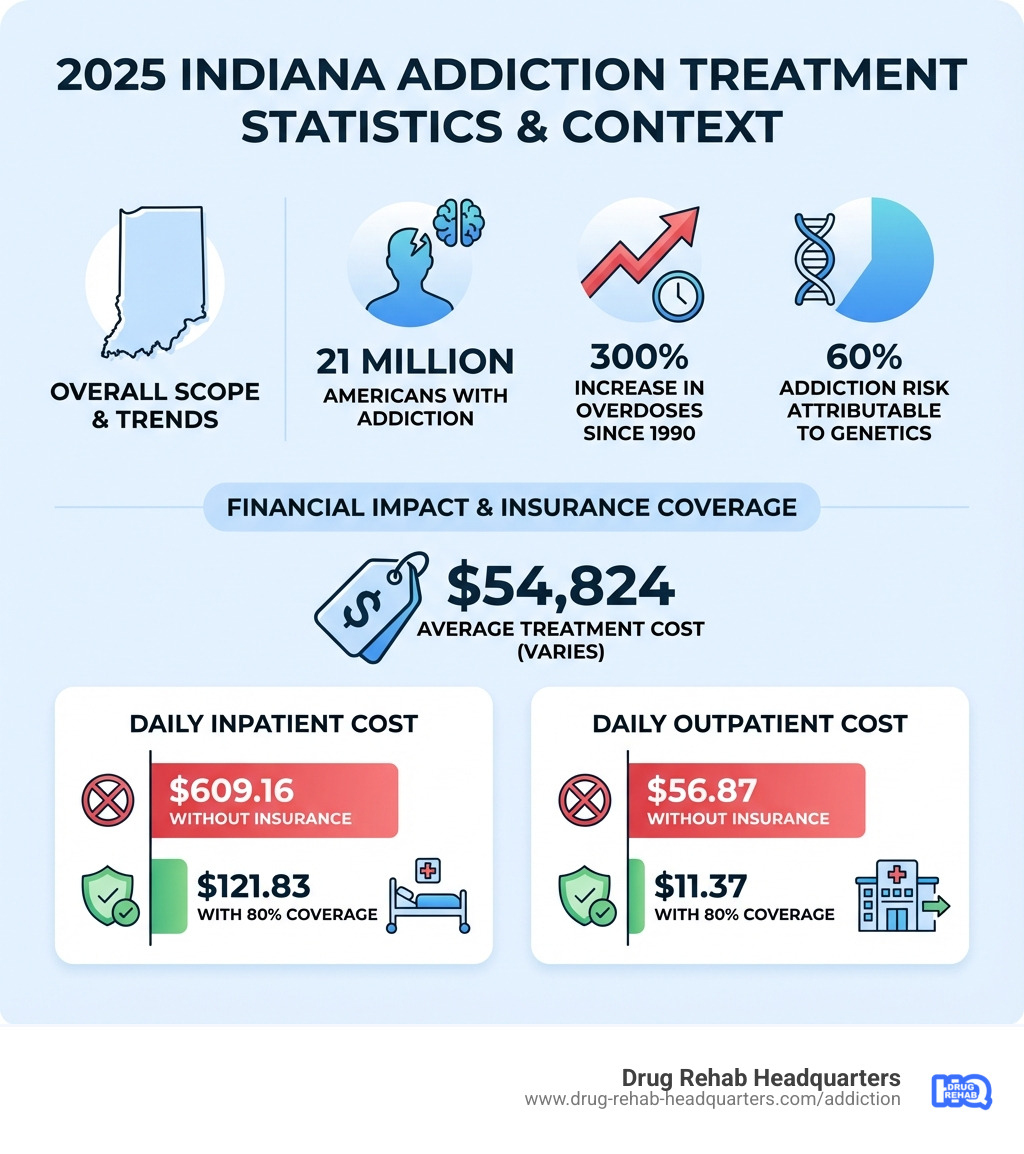
The statistics are sobering: 21 million Americans have at least one addiction, and drug overdoses have risen 300% since 1990. In Indiana, treatment can cost over $54,000 without insurance, but coverage significantly reduces this.
But the most important truth is that addiction is a treatable disease. Research shows 60% of addiction risk is genetic, not a personal failure. With proper support, recovery is possible and happens daily across Indiana.
Whether you’re worried about a loved one, have tried to quit on your own, or feel lost in the options, feeling overwhelmed is normal. Indiana has over 460 addiction treatment facilities, from upscale residential centers to state-funded programs. They offer specialized care for working professionals, co-occurring mental health conditions, and combine evidence-based therapies like CBT with holistic approaches like yoga and art therapy.
This guide simplifies the process. We’ll explain levels of care, how insurance works, what to look for in a top facility, and provide a clear roadmap for getting help in 2025.
At Drug Rehab Headquarters, we connect people with life-changing drug rehab centers in Indiana. We provide compassionate support, understanding that choosing the right center is a critical decision.
Recognizing the Need for Help: When to Seek Treatment
Knowing when to seek help for addiction can be difficult. There are clear signs that professional intervention from drug rehab centers in Indiana is necessary.
One of the most telling indicators is behavioral changes. This can manifest as secrecy, dishonesty, a sudden need for money, and neglecting responsibilities at work, school, or home. Hobbies are often abandoned for substance use, leading to fractured relationships and careers.
Physical symptoms and withdrawal are clear red flags. When trying to stop, withdrawal symptoms like intense cravings, nausea, tremors, or anxiety indicate physical dependence. Using a substance just to avoid these symptoms is a definitive sign of addiction.
A critical sign is the inability to stop or cut down on use, despite repeated attempts and devastating consequences. This powerlessness can lead to shame and hopelessness, deepening the addiction.
Many people start using substances to cope with stress, trauma, or mental health issues. While it may offer temporary relief, this ultimately worsens the original problems, creating a vicious cycle.
It’s vital to know that addiction is a treatable disease, not a moral failing. It alters brain function and requires professional intervention. Genetics play a major role, with 60% of the risk of addiction attributable to genetics. This makes professional help essential for many.
If you see these signs in yourself or a loved one, you are not alone. Reaching out for help is a courageous first step toward a healthier life.

Navigating the Landscape of Drug Rehab Centers in Indiana
Indiana has a diverse addiction treatment landscape. While having many options is good, it can be overwhelming. Drug Rehab Headquarters is here to simplify the process.
Recovery is a continuum of care with different levels of treatment. A personalized approach is paramount, as a one-size-fits-all solution doesn’t work. The right plan addresses the addiction, underlying mental health issues, trauma, and life circumstances.
We understand that making these decisions can be overwhelming. For a confidential assessment and guidance on finding the best drug rehab centers in Indiana for your unique situation, you can always Call 866-720-3784.
The Foundation of Recovery: Detox, Inpatient, and Outpatient Care
The journey to sobriety typically begins with managing withdrawal.
- Medical Detox: The essential first step, providing a safe, medically supervised experience. Patients receive 24/7 medical care to manage dangerous withdrawal symptoms and stabilize before therapy. This phase lasts from a few days to over a week.
- Inpatient/Residential Rehab: Following detox, these programs offer a structured, trigger-free environment with 24/7 intensive therapy and support. Stays of 30 to 90 days or longer allow patients to address addiction’s root causes and build coping skills. Some Indiana facilities provide 24/7 on-site nursing.
- Outpatient Programs (OP): Offering flexibility for work, school, or family, these programs involve attending therapy while living at home.
- Intensive Outpatient Programs (IOP): IOPs offer more structure than standard outpatient care. They are ideal for those transitioning from inpatient care or needing significant support without 24/7 supervision.
- Partial Hospitalization Programs (PHP): PHPs are the most intensive outpatient option, with daily treatment for several hours. This provides structured support while allowing individuals to return home each evening.
These levels of care ensure treatment can be custom to an individual’s needs, providing varying degrees of support as they progress in recovery.

Specialized Programs at Drug Rehab Centers in Indiana
Many drug rehab centers in Indiana offer specialized programs for a more targeted and effective approach to recovery.
One critical specialization is Dual Diagnosis treatment for co-occurring disorders. Addiction rarely exists alone. Approximately 50% of people with substance use disorders have dual diagnosesmeaning they also struggle with conditions like anxiety, depression, or PTSD. Leading centers integrate care for both conditions simultaneously, recognizing that treating one without the other often leads to relapse.
For professionals, some Indiana programs offer specialized tracks for working professionals, prioritizing privacy and anonymity. These programs may include flexible outpatient options and career-focused support to help individuals re-enter the workplace successfully.
Some facilities also cater to specific communities. You can find programs offering LGBTQ+ affirming care, creating a safe and understanding environment for healing. Many comprehensive centers also offer dedicated support for veterans, addressing the specific traumas and challenges faced by military personnel.
These specialized programs ensure every individual receives the most appropriate and compassionate care possible.
Therapeutic Approaches and Amenities
Modern drug rehab centers in Indiana blend proven techniques with holistic approaches for comprehensive healing.
At the core of treatment are evidence-based therapies that are proven to be effective:
- Cognitive Behavioral Therapy (CBT): Identifies and changes negative thought patterns linked to substance use.
- Dialectical Behavior Therapy (DBT): Teaches skills in mindfulness, distress tolerance, emotion regulation, and interpersonal effectiveness.
- EMDR (Eye Movement Desensitization and Reprocessing): A therapy used to process traumatic memories that may fuel addiction.
- Motivational Interviewing (MI): A client-centered approach to help resolve ambivalence about change.
- Medication-Assisted Treatment (MAT): Combines therapy and medications to treat opioid and alcohol dependence.
Many centers also accept holistic therapies to treat the whole person:
- Yoga & meditation: Reduces stress and improves mindfulness.
- Art & music therapy: Provides creative outlets for emotional expression.
- Fitness & nutrition: Promotes physical health and establishes healthy routines.
To create a conducive healing environment, many top drug rehab centers in Indiana offer upscale amenities. While not essential, amenities like private rooms, fitness centers, and chef-prepared meals can improve the patient experience and reduce stress, helping clients focus on treatment.
For help comparing these options and finding the right fit, you can call Drug Rehab Headquarters at 866-720-3784 for free, confidential guidance custom to your needs.
Understanding the Cost of Rehab in Indiana
The cost of treatment is a major concern, but understanding your options can make it less daunting.
Indiana is the 7th most affordable state for addiction treatment. Still, the average cost is $54,824 without insurance, varying by program type and duration. For example, medical detox averages around $135,161, long-term inpatient rehab averages $48,379, and outpatient treatment is more affordable at $8,039.
The good news is that insurance coverage can dramatically reduce these costs. Most major insurance providers cover addiction treatment as an essential health benefit. Additionally, many drug rehab centers in Indiana offer private pay options, financing, and sliding-scale fees. Some state-funded facilities provide free or low-cost care for those who qualify.
We believe cost should never be a barrier to recovery. Exploring these pathways is a crucial step in the healing process.
How Insurance Impacts Your Cost
Understanding your insurance is key to affording treatment. Most private and government plans (Medicaid, Medicare) are required to cover substance use disorder services.
Always start by verifying your benefits. Contact your provider or the rehab’s admissions team to understand your policy’s deductibles, co-pays, and out-of-pocket maximums. A key distinction is between in-network vs. out-of-network providers. In-network facilities have a contract with your insurance company, resulting in lower costs for you.
Many drug rehab centers in Indiana accept a wide range of common accepted insurances, including:
- Aetna
- Anthem
- Blue Cross Blue Shield
- Cigna
- Humana
- UnitedHealthcare
- Medicaid
- Medicare
- Tricare
For instance, our research shows that 77 rehabs in Indiana accept Aetna, 67 accept Anthem, and 51 accept Medicaid. This broad acceptance helps many individuals access quality care.
Don’t let insurance complexities deter you. Most centers have staff to assist with pre-authorization and claims. For a free, confidential insurance verification, Call 866-720-3784. Our team at Drug Rehab Headquarters can help you understand your benefits and connect you with suitable drug rehab centers in Indiana.
Average Daily Rehab Costs in Indiana (2025)
Understanding the daily cost of treatment can help you budget for your recovery journey in Indiana. These figures are averages and can vary based on the specific facility and program.
| Treatment Type | Cost without Insurance | Cost with 60% Coverage | Cost with 80% Coverage |
|---|---|---|---|
| Inpatient Rehab | $609.16 per day | $243.66 per day | $121.83 per day |
| Outpatient Rehab | $56.87 per day | $22.75 per day | $11.37 per day |
Note: These figures are based on a 30-day program duration for calculation purposes.
This table clearly illustrates the significant financial benefit of having insurance coverage, which substantially reduces daily costs and makes quality treatment more accessible.
What to Look for in Top-Rated Drug Rehab Centers in Indiana
Choosing the right drug rehab center in Indiana is a critical decision. With over 460 facilities, it’s important to know what distinguishes a premier center.
Accreditation matters. Look for accreditation from The Joint Commission (JCAHO) or CARF. This signifies high standards of quality and safety. The Joint Commission’s gold seal, earned by less than 20% of centers, is a top indicator of excellence.
Ensure the center has licensed and credentialed staff, including doctors, psychiatrists, licensed therapists, and nurses. Top facilities often have staff with extensive combined experience, and many are in recovery themselves, offering valuable empathy.
A hallmark of effective treatment is personalized treatment planning. A one-size-fits-all approach rarely works. The best centers conduct thorough assessments to create an individualized plan custom to your specific needs.
Recovery doesn’t end upon leaving. Strong aftercare and relapse prevention planning are crucial for long-term sobriety. This includes developing coping strategies and connecting with support groups (like AA or NA) and alumni networks.
Finally, pay attention to positive patient testimonials. Consistent positive feedback on platforms like Google often reflects genuine patient satisfaction and effective care.
At Drug Rehab Headquarters, we are dedicated to helping you find the right support. You can find the right drug treatment center for your needs through our comprehensive resources.
Key Features of Premier Indiana Rehabs
When evaluating drug rehab centers in Indiana, consider these key features that define premier facilities:
- Gold-Standard Accreditation: Accreditation from The Joint Commission (JCAHO) or CARF, indicating high standards of safety and care.
- A Full Continuum of Care: Offers seamless transitions between all levels of care, from detox to outpatient. The Indiana Center for Recovery is one example offering this.
- Expertise in Dual Diagnosis: The ability to treat co-occurring mental health conditions is critical, as about 50% of individuals with SUD have them.
- A Blend of Evidence-Based & Holistic Therapies: Combines proven methods like CBT, DBT, and MAT with holistic options like yoga, art, and music therapy.
- Low Client-to-Staff Ratios: Ensures more personalized attention and a stronger connection between patients and their care team.
- High-Quality, Comfortable Amenities: A clean, supportive environment with amenities like private rooms and recreational options can improve the healing process.
- Robust Aftercare & Alumni Support: Comprehensive aftercare planning, relapse prevention, and active alumni networks provide ongoing community and support.
- A History of Positive Patient Reviews: Consistent positive feedback from former patients is a strong indicator of a center’s effectiveness and compassionate care.
Frequently Asked Questions about Indiana Rehab Centers
Here are answers to common questions about drug rehab centers in Indiana:
How long does rehab in Indiana typically last?
Rehab duration is individualized and progress-based, not time-based. It depends on addiction severity, substance type, and co-occurring conditions. General timelines are:
- Detox: A few days to a week or more.
- Residential/Inpatient: Typically 30 to 90 days, but can be longer for deeper therapeutic work.
- Outpatient programs: Can last several weeks to months, with standard outpatient care continuing as part of aftercare.
The goal is to provide enough time to heal and build tools for sustained recovery.
Can I keep my job while attending rehab?
Yes. Federal laws offer job protection, and many drug rehab centers in Indiana are designed to accommodate working professionals.
- Legal Protections: The Family and Medical Leave Act (FMLA) allows up to 12 weeks of unpaid, job-protected leave for medical reasons, including treatment. The Americans with Disabilities Act (ADA) also protects individuals from discrimination.
- Communicating with your employer: An honest conversation with your employer about seeking treatment for a medical matter is often the best approach. Many employers are supportive.
- Flexible Outpatient and IOP Programs: These programs allow you to attend treatment during the day or evening while living at home, making it possible to balance recovery and work. Some centers, like Parkdale Center, have specialized programs for professionals.
What happens on the first day of treatment?
The first day can be emotional, but facilities are designed to make the transition smooth. You can typically expect:
- Intake Process: Staff will greet you and help with admission paperwork, including identity and insurance verification and consent forms.
- Facility Tour: You’ll get a tour of the facility, including your room, common areas, and therapy spaces.
- Initial Medical and Psychological Assessment: A medical team will conduct a physical exam, and a mental health professional will perform a psychological evaluation to understand your history and needs.
- Meeting your primary therapist: You’ll be introduced to your primary therapist, who will be your main contact and begin discussing your treatment goals.
- Developing your personalized treatment plan: The clinical team will start creating an individualized treatment plan based on your assessments.
- Settling In: You’ll have time to unpack and get familiar with the center’s daily schedule.
The first day is about getting comfortable and laying the groundwork for your recovery. Staff are there to support you at every step.
Your Path to Recovery Starts Today
Taking the first step toward recovery is the most rewarding decision you can make. Addiction is a powerful but treatable disease. With the right support, a fulfilling, sober life is a tangible reality.
Drug rehab centers in Indiana offer a compassionate network of care to guide you to a substance-free future. From detox to aftercare, these facilities are equipped to help you reclaim your life.
Recovery is a journey of growth, and you don’t have to do it alone. Our team at Drug Rehab Headquarters is here to provide the information and support you need to make an informed decision.
If you or a loved one are ready to take that courageous first step, don’t hesitate. Call our 24/7 confidential helpline at 866-720-3784 to speak with a recovery specialist now. Hope is just a phone call away.