

Understanding Your Options for Alcohol Addiction Treatment
Rehab centers for alcoholics offer a range of evidence-based treatment programs designed to help individuals overcome alcohol use disorder (AUD) and achieve lasting recovery. Here’s what you need to know when comparing your options:
Key Treatment Options at a Glance:
- Inpatient/Residential Rehab: 24/7 medical supervision, structured environment, 30-90 day programs, ideal for severe AUD
- Outpatient Programs: Flexible scheduling (PHP, IOP, standard OP), attend therapy while living at home, suitable for mild to moderate AUD
- Specialized Programs: Dual diagnosis treatment, gender-specific care, programs for veterans, executives, and LGBTQ+ individuals
- Cost Range: $56,653 average in New York (2025), with insurance reducing daily costs by 60-80%
- Accreditation: Look for Joint Commission or CARF certification, state licensing, and board-certified staff
Alcohol use disorder affects more than 20 million Americans as of 2025, making it one of the most common substance use disorders in the country. The good news? AUD is a treatable medical condition, not a character flaw. With the right professional support, most people with alcohol addiction can substantially reduce their drinking and rebuild their lives.
The path to recovery begins with understanding your treatment options. Whether you need intensive inpatient care with medical detox or flexible outpatient therapy that fits around your job and family, there’s a program designed for your specific needs. Key factors include the severity of your drinking, co-occurring mental health conditions, your support system at home, and financial considerations.
At Drug Rehab Headquarters, we’ve helped thousands of individuals and families steer the complex process of finding quality rehab centers for alcoholics that match their unique recovery needs. Our team of addiction specialists provides free, confidential consultations 24/7 to connect you with accredited treatment programs. Call us at 866-720-3784 to start your journey today.
Understanding Alcohol Addiction and When to Seek Help
Alcohol use disorder (AUD), often referred to as alcoholism, is a chronic medical condition characterized by an impaired ability to stop or control alcohol use despite adverse social, occupational, or health consequences. It’s not a moral failing or a lack of willpower; it’s a complex brain disease that requires professional intervention. Overcoming the stigma associated with addiction is a crucial first step, as misunderstanding has historically prevented many from seeking the help they deserve. As of 2025, nearly a quarter of the adult population meets the criteria for AUD, highlighting just how common this health issue is.
Recognizing the need for professional help can be challenging, but it’s the most important step toward recovery. If alcohol-related problems are impacting your health, work, or relationships, it’s time to consider professional treatment. We encourage you to ask yourself some honest questions about your drinking habits:
- How often and how much do you drink?
- Do you sometimes drink more than you intend to?
- Have you tried to cut down or quit drinking but found yourself unable to?
- Do you spend a lot of time drinking or recovering from its effects?
- Has alcohol caused problems in your home life, family, job, or school?
- Do you continue to drink despite it causing trouble with loved ones or feeling depressed or anxious?
- Have you given up important activities because of drinking?
- Do you engage in risky behaviors while drinking?
- Do you need more alcohol to get the same effect you used to?
- Do you experience withdrawal symptoms when alcohol wears off, such as shakiness, restlessness, or nausea?
If you answered yes to several of these questions, you might be struggling with AUD. For more detailed information on identifying the signs of addiction, you can explore our guide on More info about the signs of addiction.
Key Signs of Alcohol Use Disorder (AUD)
Let’s dig a bit deeper into the specific indicators that suggest a need for treatment:
- Increased Tolerance: You need to drink more alcohol than before to feel its effects.
- Drinking More Than Intended: You often drink larger amounts or for longer periods than you planned.
- Unsuccessful Attempts to Quit: You have a persistent desire or have made unsuccessful efforts to cut down or control alcohol use.
- Cravings: You experience strong urges or desires to drink alcohol.
- Neglecting Responsibilities: Alcohol use interferes with your major role obligations at work, school, or home.
- Continued Use Despite Negative Consequences: You continue to drink even when it causes or worsens physical or psychological problems, or leads to interpersonal difficulties.
- Withdrawal Symptoms: When the effects of alcohol wear off, you experience unpleasant physical and psychological symptoms. Understanding The dangers of withdrawal is crucial, as these can be severe and even life-threatening.
Why Professional Treatment is Crucial
The journey to recovery from alcohol addiction is rarely easy, and attempting to quit alone can be dangerous. This is where professional treatment, particularly rehab centers for alcoholics, becomes not just helpful, but crucial.
Firstly, the medical risks associated with alcohol detox are significant. When someone with a severe AUD stops drinking, they can experience severe withdrawal symptoms, including seizures, hallucinations, and delirium tremens (DTs), which can be fatal. Medically assisted alcohol detox in a dedicated treatment center is always recommended. Professional support ensures the withdrawal journey is as safe and comfortable as possible, with medical staff on hand to manage symptoms and prevent complications. If you have clear and active medical concerns such as withdrawal symptoms, seeking medical treatment immediately is the very first step.
Beyond the physical aspects, psychological dependency plays a huge role. Alcohol addiction often co-occurs with other mental health disorders like depression, anxiety, or PTSD. In fact, about 8 million Americans living with substance use disorder also have one or more co-existing psychiatric diseases. This “dual diagnosis” makes treatment more complex, as both conditions need to be addressed simultaneously for effective, lasting recovery. Our research shows that Why professional mental health treatment is in high demand is increasingly important for comprehensive care.
Professional rehab centers for alcoholics provide behavioral therapies designed to help you manage addiction, identify its root causes, deal with psychological stress, and build healthy coping mechanisms. This foundation is essential for long-term sobriety. The first part of the recovery process is to safely remove alcohol from your system, but the real work of healing begins with therapy and support.
Types of Rehab Centers for Alcoholics
When considering rehab centers for alcoholics, it’s important to understand the different levels of care available. The “one-size-fits-all” approach simply doesn’t work for addiction treatment. Matching the program intensity to your individual needs is key to successful recovery.
Here’s a quick comparison of inpatient versus outpatient rehab:
| Feature | Inpatient/Residential Rehab | Outpatient Rehab |
|---|---|---|
| Intensity | High: 24/7 structured care, medical supervision | Varies: Partial Hospitalization (PHP), Intensive Outpatient (IOP), Standard Outpatient (OP) |
| Living Situation | Live at the facility | Live at home, attend sessions during the day/evening |
| Cost (NY, per day) | ~$629.48 (without insurance) to ~$125.90 (80% insurance) | ~$56.87 (without insurance) to ~$11.37 (80% insurance) |
| Ideal Candidate | Severe AUD, high risk of relapse, unstable home environment, co-occurring disorders, need for medical detox | Mild to moderate AUD, stable home environment, work/family commitments, step-down from inpatient |

Inpatient and Residential Rehab Programs
For those struggling with severe alcohol addiction, inpatient and residential rehab centers for alcoholics offer the most intensive level of care. These programs provide a structured, supportive environment away from triggers and distractions, allowing you to focus entirely on your recovery. You’ll live at the facility, receiving round-the-clock medical supervision and personalized support from a dedicated team of professionals.
The benefits of inpatient treatment are numerous. It removes you from environments where alcohol is easily accessible, providing a safe space to detox effectively and gain necessary skills for sobriety. Programs typically range from 30 to 90 days, though the length of stay can vary based on individual needs, sometimes from 2 to 6 weeks, as seen in facilities like South Beach Addiction Treatment Center. During this time, you’ll engage in a combination of behavioral therapies, individual and group counseling, and medication management. For more on the initial stages, you can review our information on Information on inpatient detox.
Some inpatient programs also include therapeutic communities (TCs), which offer highly structured, long-term treatment designed to help patients reintegrate into society with a strong foundation of support and coping skills.
Outpatient Rehab Programs for Alcoholics
Outpatient rehab centers for alcoholics offer a more flexible approach, allowing individuals to attend therapy and receive support while continuing to live at home, work, or care for their families. This option is suitable for those with mild to moderate AUD, a stable home environment, and a strong commitment to recovery.
There are several levels of outpatient care:
- Partial Hospitalization Programs (PHP): This is the most intensive form of outpatient care, often referred to as “day treatment.” You attend sessions for several hours a day, multiple days a week, but return home in the evenings. PHPs are ideal if you need a high level of support but cannot commit to inpatient care.
- Intensive Outpatient Programs (IOP): IOPs offer fewer hours per week than PHPs, typically 9-12 hours, focusing on group therapy, individual counseling, and relapse prevention. They provide a strong support system while allowing you to maintain daily responsibilities.
- Standard Outpatient Care: This involves regular, but less frequent, therapy sessions, such as once or twice a week. It’s often used as a step-down from more intensive programs or for those with less severe AUD.
Outpatient programs provide many of the same therapeutic services as inpatient care, including individual and group counseling, but with the added flexibility. If you’re looking for shorter, focused options, our guide on Options for short-term rehab might be helpful.
Specialized Rehab Centers for Alcoholics
Recognizing that everyone’s journey is unique, many rehab centers for alcoholics offer specialized programs custom to specific needs and demographics. These programs acknowledge that certain groups face distinct challenges and can benefit from targeted support.
- Dual Diagnosis Programs: It’s common for AUD to co-occur with mental health conditions like depression, anxiety, or PTSD. Dual diagnosis treatment addresses both the addiction and the underlying mental health disorder simultaneously. This integrated approach is crucial because having two illnesses can make treating each one more difficult, and ignoring one can undermine recovery from the other.
- Gender-Specific Programs: Some individuals feel more comfortable and open in environments with peers of the same gender. These programs can address gender-specific issues, trauma, and societal pressures that may contribute to addiction. For more on this, check out Treatment options for women.
- Programs for Veterans and First Responders: These brave individuals often experience unique stressors and traumas that can lead to alcohol addiction. Specialized programs cater to their experiences, offering therapies like PTSD treatment and peer support from those with similar backgrounds. The U.S. Department of Veterans Affairs (VA) also provides substance use disorder services specifically for veterans.
- Executive Rehab: Designed for professionals and executives, these programs offer discreet, high-quality care that accommodates work responsibilities, often with private rooms and business amenities. Facilities like NewYork-Presbyterian’s “The Haven” offer deluxe inpatient units with discreet, compassionate care.
- LGBTQ+ Affirming Care: These programs provide a safe and inclusive environment for LGBTQ+ individuals, addressing specific issues related to identity, discrimination, and community.
These specialized programs ensure that treatment is not just effective, but also deeply relevant and supportive to your personal circumstances.
How to Choose the Right Alcohol Rehab Center
Choosing the right rehab centers for alcoholics is a deeply personal and significant decision. It requires careful consideration to ensure the program aligns with your needs, values, and recovery goals. Making an informed decision now can significantly impact your long-term success. If you ever feel overwhelmed or need immediate guidance, remember you can call Drug Rehab Headquarters 24/7 at 866-720-3784 for a free, confidential consultation. We’re here to help you steer your options.

When evaluating potential centers, ask yourself key questions: What is my current medical condition? Am I treating only alcohol, or are there co-occurring mental health issues or other substance use? Can I travel for rehab, or do I need to stay local? What are my financial options?
Verify Accreditation and Licensing
One of the most critical steps in selecting a rehab center for alcoholics is to verify its accreditation and licensing. These credentials are your assurance of quality care, safety, and ethical practices.
- Accreditation: Look for facilities accredited by reputable third-party organizations such as The Joint Commission or CARF (Commission on Accreditation of Rehabilitation Facilities). These bodies set stringent quality benchmarks for patient care, safety, and program effectiveness. For instance, Blake Recovery Center, a nationally recognized leader in substance use treatment, is Joint Commission-accredited. Accreditation signifies that a center has undergone rigorous evaluations and meets high standards in areas like treatment planning, patient rights, and staff qualifications.
- State Licensing: Ensure the facility is licensed by the state in which it operates. State licensing confirms that the center complies with local regulations regarding healthcare provision.
Accreditation and licensing mean that the center is committed to evidence-based practices and continuous improvement, which translates to better care for you. To find quality treatment options, you can start your search with Find quality treatment with Drug Rehab Headquarters.
Understanding Costs and Insurance Coverage
The cost of treatment at rehab centers for alcoholics can be a significant concern, but it shouldn’t be a barrier to seeking help. Understanding your financial options is essential.
For example, in New York, the average cost for substance abuse treatment is around $56,653. However, this is a broad average and daily costs vary significantly based on the type of program:
- Inpatient Rehab in New York (per day):
- Approximately $629.48 without insurance coverage.
- Around $251.79 with 60% insurance coverage.
- About $125.90 with 80% insurance coverage.
- Outpatient Rehab in New York (per day):
- Approximately $56.87 without insurance coverage.
- Around $22.75 with 60% insurance coverage.
- About $11.37 with 80% insurance coverage.
Most rehab centers for alcoholics accept a wide range of insurance plans, including private insurance, Medicaid, and Medicare. It’s crucial to verify your insurance coverage directly with the center or through a specialized service. Many facilities, including South Beach Addiction Treatment Center, base fees on an individual’s ability to pay, ensuring no one is denied access solely due to financial limitations.
If you have health insurance, it can make the process easier, but it’s still important to find a provider both in your network and within your budget. For those without insurance, state or county-level programs often exist, though they may have waitlists. Many centers also offer various payment options and financing plans.
Don’t let cost deter you from seeking help. Call 866-720-3784 today for insurance verification and to discuss financial assistance options. Our team at Drug Rehab Headquarters is here to help you understand what’s covered and find affordable solutions.
Evaluate Treatment Methods and Staff Qualifications
The effectiveness of rehab centers for alcoholics largely depends on the treatment methods employed and the expertise of the staff. You want a program that uses scientifically validated approaches and has a highly qualified team.
Look for centers that offer:
- Evidence-Based Therapies: These are treatments supported by scientific research, such as Cognitive Behavioral Therapy (CBT), Dialectical Behavior Therapy (DBT), and Motivational Interviewing (MI). These therapies help you identify the root causes of addiction, develop healthy coping skills, and manage stress.
- Individualized Treatment Plans: No two individuals are alike, and treatment should reflect that. A quality center will conduct a comprehensive assessment (physical, psychiatric, psychosocial, spiritual, vocational) to create a personalized plan custom to your strengths, needs, and issues.
- Qualified Staff: The team should include board-certified addiction doctors (addiction medicine physicians and addiction psychiatrists), licensed therapists, and experienced counselors. Addiction doctors are highly trained specialists who can provide full assessments, treatment plans, and prescribe medications. Therapists with addiction specialties can help you set goals, develop skills, and build a strong support system.
- Holistic and Alternative Therapies: Many reputable centers integrate traditional therapies with holistic approaches like yoga, meditation, mindfulness, creative arts therapy, or even equine and animal therapy. These can be valuable adjuncts for stress management, emotional regulation, and overall well-being.
By evaluating these aspects, you can ensure you’re choosing a program that offers comprehensive, effective, and compassionate care. To explore different alcohol rehab options and learn more about treatment approaches, visit Explore different alcohol rehab options.
The Journey Through Treatment and Beyond
Recovery from alcohol addiction is an ongoing process, a marathon, not a sprint. It’s a journey that extends far beyond the initial treatment period in rehab centers for alcoholics. Building a strong foundation for sobriety during treatment is crucial, but maintaining it requires continuous effort and support. Setbacks, or returns to drinking, are common and should be viewed as part of the recovery process, not as failures. They are temporary and can be managed with professional help.
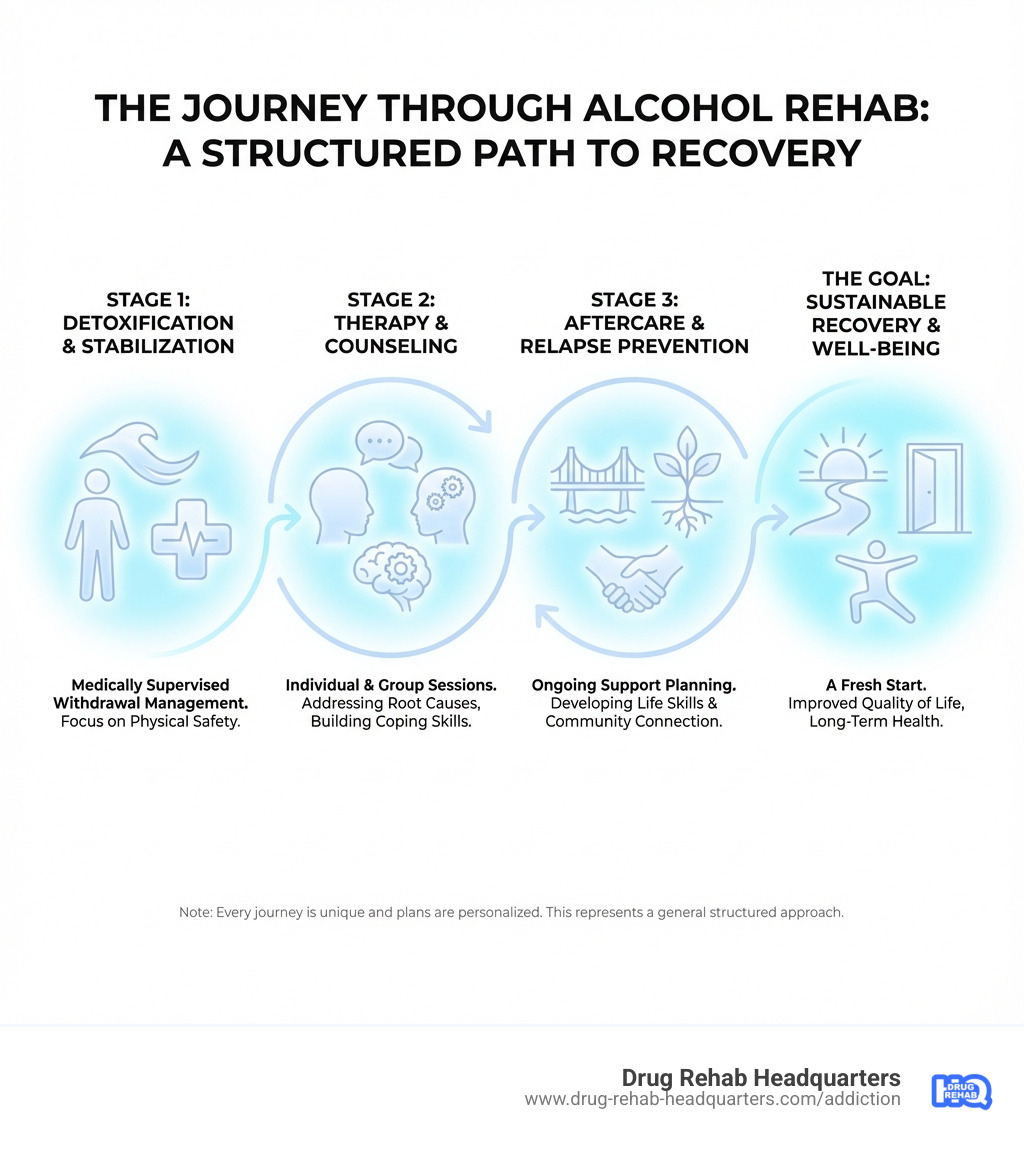
Medically Supervised Detox
The very first step in overcoming alcohol addiction is often medically supervised detox. As we’ve discussed, stopping alcohol use, especially after prolonged heavy drinking, can lead to severe and potentially life-threatening withdrawal symptoms.
During detox at rehab centers for alcoholics, medical professionals closely monitor your vital signs and administer medications to manage withdrawal symptoms safely and comfortably. Benzodiazepines, for instance, are commonly used because they are chemically similar to alcohol in how they interact with the brain, helping to ease the withdrawal process. Detoxification typically lasts between 2 to 7 days, depending on the severity of the addiction and individual factors. The primary goal is to ensure your safety and stabilize your physical health before you begin the deeper therapeutic work. This medical oversight is paramount.
Therapy and Counseling
Once detox is complete, the core of recovery in rehab centers for alcoholics revolves around therapy and counseling. This is where you gain the insights and tools necessary for long-term sobriety.
- Individual Therapy: You’ll work one-on-one with a therapist to explore the underlying causes of your addiction, identify personal triggers, address co-occurring mental health issues, and develop personalized coping strategies. Therapies like CBT and MI are often employed here.
- Group Counseling: Group sessions provide a powerful sense of community and shared experience. You’ll learn from others, offer support, and practice new communication and social skills in a safe environment. This can include specialized groups focusing on relapse prevention, dual diagnosis, or 12-step programs.
- Family Therapy: Alcohol addiction impacts the entire family unit. Family counseling helps to heal strained relationships, improve communication, and educate loved ones on how to best support the recovery process.
These therapeutic modalities are designed to help you manage alcohol addiction, identify its root causes, deal with psychological stress, and develop healthy coping skills. To learn more about different treatment therapies, visit Learn about different treatment therapies.
Aftercare and Relapse Prevention
Leaving a rehab center for alcoholics is a significant milestone, but it’s just the beginning of a lifelong recovery journey. Aftercare and relapse prevention are critical components for sustaining sobriety. Recovery is a continuous pursuit that doesn’t end after rehab; it requires ongoing support to combat cravings, manage triggers, and prevent relapse.
A comprehensive aftercare plan is a pre-planned guide for the next steps in early recovery, addressing various needs in your life. This can include:
- Sober Living Homes: These provide a supportive, alcohol-free environment for individuals transitioning from residential treatment back into independent living.
- Alumni Programs: Many rehab centers offer alumni networks that provide continued support, social events, and connections with others who have completed the program.
- Support Groups: Mutual-support groups like Alcoholics Anonymous (AA), SMART Recovery, Women for Sobriety, Al-Anon, and Alateen are invaluable resources. They offer peer support, shared experiences, and a structured path to maintaining sobriety.
- Ongoing Therapy and Counseling: Continuing individual or group therapy after formal rehab can provide consistent professional support and help you steer new challenges.
- Relapse Prevention Plan: You’ll work with your treatment team to develop a personalized plan that identifies your triggers and outlines specific strategies to cope with them and prevent a return to drinking.
The importance of ongoing support cannot be overstated. It helps you integrate the skills learned in rehab into your daily life and provides a safety net during challenging times. To find treatment and aftercare options in your area, including New York, you can explore resources like Find treatment in your area.
Finding Immediate Help and Resources
If you or a loved one needs immediate help for alcohol addiction, resources are available 24/7. You are not alone, and confidential support is just a phone call or text away. Reaching out is a sign of strength, not weakness.
National Helplines and Lifelines
For immediate assistance and guidance in finding rehab centers for alcoholics or crisis support:
- Drug Rehab Headquarters Confidential Alcohol Addiction Hotline: Our specialists are available 24/7 to provide free, confidential consultations and connect you with accredited treatment programs custom to your needs. Call us directly at 866-720-3784. You can also find more information here: Alcohol Addiction Hotline.
- 988 Suicide & Crisis Lifeline: If you are in emotional distress or suicidal crisis, dial or text 988. This service provides 24-hour, confidential support to anyone in need.
- SAMHSA’s National Helpline: The Substance Abuse and Mental Health Services Administration (SAMHSA) offers a national helpline (1-800-662-HELP (4357)) for individuals and families facing mental and/or substance use disorders.
- Veterans Crisis Line: For veterans in crisis, call 988 and press 1, or text 838255. Confidential support is available 24/7.
- FindTreatment.gov: This government website, FindTreatment.gov, allows you to search for facilities and programs for mental health and substance use disorders.
When you call these helplines, you can expect to speak with a trained professional who will listen without judgment, assess your situation, and provide immediate support, information, and referrals to appropriate services or rehab centers for alcoholics.
Your Path to Recovery Starts Today
As we’ve explored, alcohol use disorder is a pervasive and challenging condition, but it is fundamentally a treatable medical disease. With over 20 million Americans affected, the need for effective rehab centers for alcoholics is immense, and the good news is that recovery is not just a possibility, but a reality for countless individuals.
Your journey to a healthier, alcohol-free future begins with a single, courageous step: reaching out for help. Whether you need intensive inpatient care, flexible outpatient support, or specialized programs custom to your unique circumstances, there are options available. We’ve highlighted the importance of verifying accreditation, understanding costs and insurance, and evaluating treatment methods and staff qualifications to ensure you find a program that truly fits your needs.
Recovery is an ongoing process that extends beyond initial treatment, supported by medically supervised detox, comprehensive therapy, and robust aftercare planning. You are not alone in this journey.
For personalized guidance in finding the right rehab centers for alcoholics that align with your individual needs and recovery goals, contact the specialists at Drug Rehab Headquarters. Our compassionate team is available 24/7 to provide confidential consultations and connect you with accredited treatment programs. Call us today at 866-720-3784 to start your journey toward a brighter, healthier future.